
Task Force to Tackle Plastics
EXECUTIVE ORDER
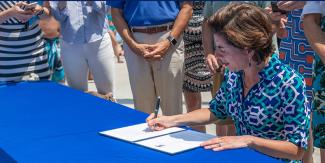
Governor Gina M. Raimondo signs the Executive Order to Tackle Plastics.
TASK FORCE
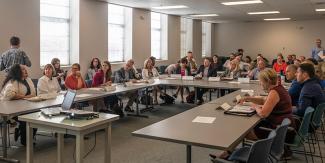
Task force members appointed by the Governor, meet at DEM headquarters.
THE PROBLEM WITH PLASTICS
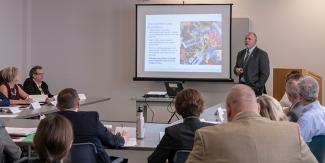
Terrence Gray, DEM Associate Director for Environmental Protection, presents the harmful side of plastics at a meeting of the task force.
Task Force to Tackle Plastics
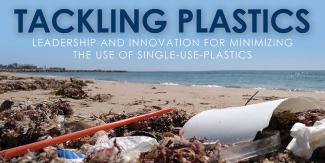
In July, Governor Gina M. Raimondo signed an Executive Order aimed to reduce reliance on single-use plastics that often end up in Rhode Island's waters and shoreline. The Tackling Plastics Executive Order targets single-use disposables such as shopping bags, bottles, cups and straws - along with items like six-pack rings and balloons - that become unsightly, dangerous and all-too-familiar litter on land and in coastal waters.
The Executive Order specifically creates a task force that will:
- Encourage the financial and market factors needed to support reducing and recycling plastics;
- Develop non-regulatory recognition and incentive programs, potential legislation and/or regulations and other measures to eliminate the sources of plastic pollution;
- Support and build on the new Zero Plastics Initiative with the Rhode Island Marine Trades Association (RIMTA) and on the state's existing, successful recycling programs; and
- Educate Rhode Islanders on the importance of and means to reducing and recycling plastics.
Task force members appointed by the Governor, include environmental groups, marinas, relevant industries, academia, municipalities, elected officials, and State agencies. This collaboration will help Rhode Island make meaningful progress in creating a comprehensive, source-reduction approach to address the problems associated with single-use plastics and packaging to create a stronger, safer, and greener Rhode Island for future generations.
The Harmful Side of Plastics
- More plastic has been produced over the last 10 years than during the whole of the last century.
- Eight million tons of plastic are dumped into the ocean every year.
- That’s a whole garbage truck per minute – and 80 percent of that comes from land-based sources.
- Virtually every piece of plastic ever made still exists in some shape or form.
Final Report
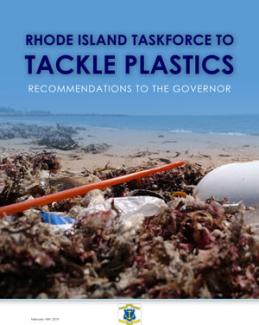
The Governor’s Task Force to Tackle Plastics released its final report on Feb. 14, 2019. The report is the first step in what will be a longer process to address pollution, single-use disposable plastics, and recycling in Rhode Island. Its recommendations include:
- Encouraging and enabling voluntary reduction of single-use plastics by state government and businesses across sectors.
- Reducing the number of single-use bags by establishing a ban on single-use plastic check-out bags and a fee on single-use paper check-out bags and pairing that change with increased availability of free reusable bags, especially for vulnerable populations.
- Increasing awareness of plastic pollution and recycling and its implications through educational initiatives that meet target audiences in their daily lives, in meaningful ways.
- Supporting innovation related but not limited to single-use disposables, drawing on the strengths of Rhode Island by involving businesses and academic organizations.
Resources
Related Documents:
- American Chemistry Council presentation to Innovation workgroup, 1-17-19
- Victor Bell presentation to Innovation workgroup, 1-17-19
- Press Release: Announcement of State Commitment to 'Tackle Plastics'
- Executive Order: Tacking Plastics
- Task Force Members
- Zero Plastics Marina Initiative