
Historic Town Center - Introduction to the Site
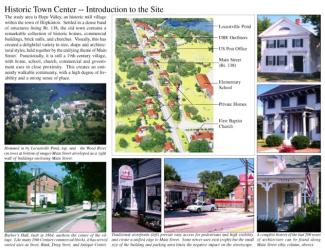
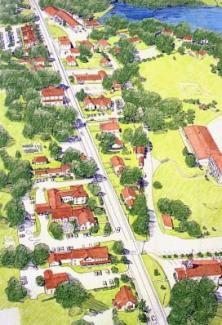
Historic Town Center - Existing Conditions Before Development
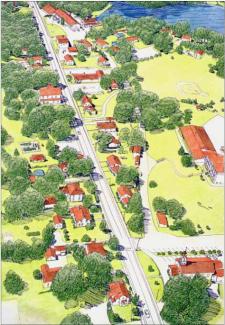
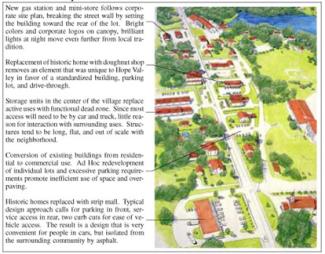
Historic Town Center -- After Conventional Development
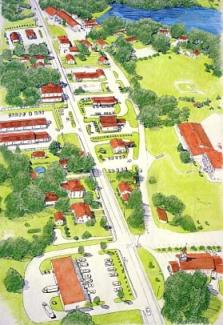
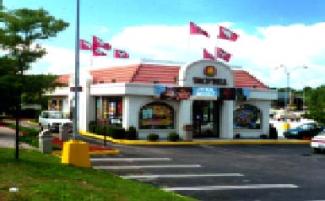
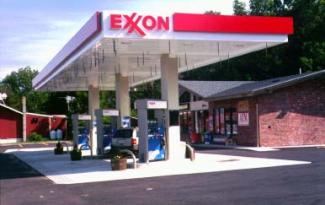
Historic Town Center -- After Creative Development
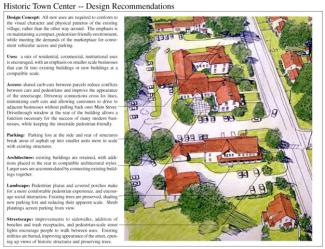
Historic Town Center - Design Recommendations
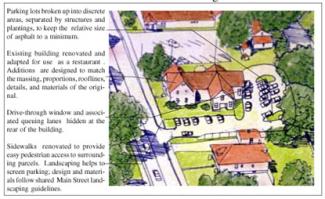
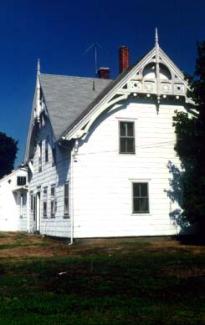
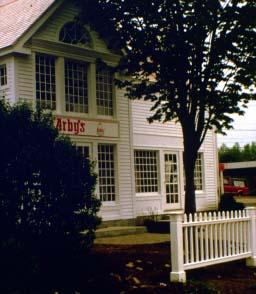
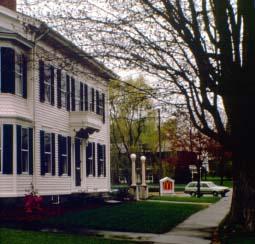
This striking Victorian was recently the subject of a plan to replace it with a stock corporate doughnut shop Admittedly more expensive, saving this building and adding on to it to provide the necessary space for the proposed use will add to the unique character of the village , promoting good neighborhood relations and a memorable experience by visitors. By planning for the good of the entire village, rather than just one use, good corporate citizens can plant the seeds of long-term success. This approach has succeeded for several fast-food establishments in the tourist mecca of Freeport, Maine. McDonald's (below right) renovated an existing dwelling , while Arby's (below left) built a new building in a compatible style. Both reflect their historic village context and add to the economic success of the whole town.
Historic Town Center -- Implementation Techniques and Examples
Implementation of the creative development alternative begins with a masterplan for Hope Valley that would guide public and private investment in a coordinated approach to development of each parcel. The masterplan would probably be created with the assistants of consultants, with extensive input from all landowners and other stakeholders. It would establish permitted and prohibited uses, as well as dimensional and density standards, and general location of buildings, additions, driveways and parking areas. Once an acceptable masterplan was created, it would be implemented by means of a Planned Village Development District within the Hopkinton Zoning Ordinance, which would list uses, dimensional and density standards; parking requirements, open space set-asides, and design standards for architecture, landscaping, signage, and illumination. In addition, the masterplan approach could foster a series of capital improvement projects: streetscape improvements, especially sidewalks, lighting, and shade tree planting; stormwater management, including creation of treatment ponds and constructed wetlands to treat stormwater runoff before it reaches existing waterbodies; park and playground improvements; shared parking lots, shuttle bus service, and other means to foster pedestrian uses and economic growth.
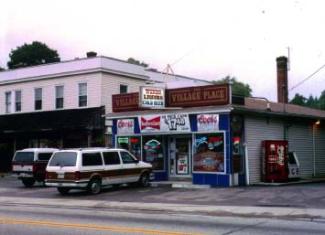
While many people would happily see this kind of storefront replaced with a mini-mall, care should be taken to not throw the baby out with the bathwater. Underneath this workaday facade there is a solid commercial building that relates well to the street. As time goes on, the marketplace will promote improvements to parking and signage.
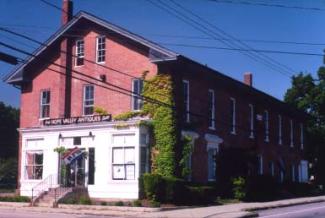
This structure was once a bank, and now serves as an antique store; it could become a bank again , or some other use, if there are incentives to encourage adaptive reuse of existing structures, rather than replacing structures themselves every time a new use comes along.
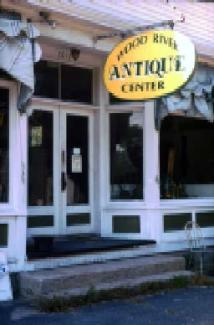
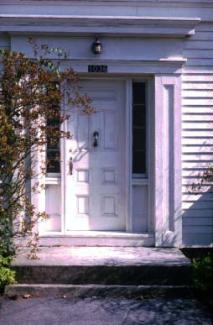
The classic design of these building entrances, and the attention to detail and craftsmanship of their construction could not easily be duplicated today. These make a major contribution to the character of the village in their own right, and together with a hundred other historic building details up and down the street, provide a ready-made architectural palette that should be adopted for new construction.
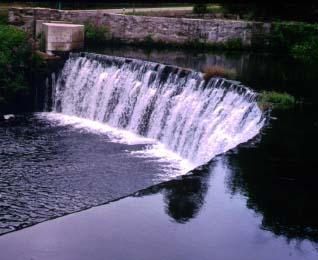
Hope Valley's rich history as a mill village and commercial center has endowed the area with irreplaceable architectural and engineering artifacts, like this dam, that could not be replicated today. These cultural resources do and will continue to attract people who want to live, work and shop in a real place, and are the keys to how the village can compete with new development on large parcels out by the interstate.
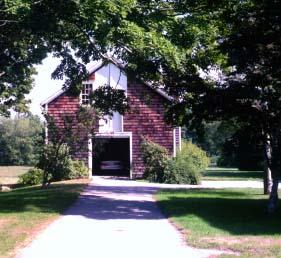
Existing outbuildings can often be adapted to new uses, especially for artisans and small businesses that don't require much parking. Incentives for reuse of such buildings can bring activity back to the town center and serve as inexpensive "incubator" space for new businesses.